






When a new baby arrives, the help comes flooding in. Flowers, visitors, meals on the doorstep. But a few weeks later, just as the exhaustion peaks, it quietly disappears.
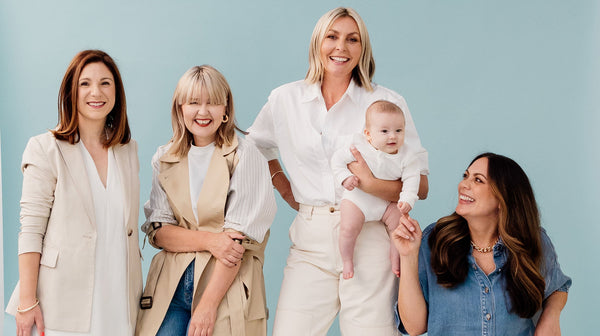
Elle and Daisy from The Whole Bowl Co know this moment well. They've lived it themselves, and they hear about it every day from the mums they feed. This Perinatal Mental Health Week, as we focus on this year's theme, Hold The Parent, we sat down with them to talk about the support gap, the link between food and mood, and the simple things that make the biggest difference.
The support gap
Elle describes it as two lines on a graph. The first is the help a new mum gets. It spikes the moment her baby arrives: "Visitors, flowers, meals on the doorstep, a partner home on leave, her mum on the couch." Then, around weeks two to three, it drops off sharply. Partners go back to work, the visitors stop coming, and the meals in the freezer run out.
The second line is what she actually needs, and that one keeps climbing.
"By week four she's carrying weeks of broken sleep, she's still recovering from birth, she may be cluster feeding, and the world quietly assumes she's found her feet," Elle says. "The gap between those two lines is widest right when everyone else has moved on."
It isn't that people stop caring. "The help just arrives all at once, at the start, when the hardest weeks are still ahead."
The research reflects what so many mums say. In the 2026 Beyond the Village survey of more than 1,000 Australian mums, only 38% said they feel part of a village, and 71% said they feel isolated from their previous social networks. When support disappears just as exhaustion peaks, mums can feel incredibly alone, and often like they should be coping better than they are.
The fix doesn't have to be big. "A text in week four, a coffee on the doorstep, dinner in the freezer," Elle says. "Timing matters as much as the gesture."
Plan your postpartum before you need it
Daisy's family live overseas, but her parents came to stay for three months when her baby arrived. "It was a lifesaver for us," she says. "Meals freshly made every day, the washing was done, the house was clean."
She knows not everyone has that. "If we hadn't been so lucky to have had that help, I definitely would have outsourced meals, a postpartum doula and a cleaner. I found that reducing the mental and physical load in those early weeks and months really gave us time and energy to enjoy our new baby."
At The Whole Bowl Co, they often say, "If you show up to my baby shower, show up for my postpartum." But Daisy is realistic about how busy life gets for everyone. "No one is coming to save you. Have a plan before you are too exhausted to make one."
Food and mood
What a new mum eats affects more than her body. "What we eat can influence our energy, blood sugar levels, concentration and the nutrients our brains need to function well," Daisy explains. "When we skip meals or survive on coffee, we can feel even more depleted, irritable and overwhelmed."
There's an emotional side too. "Having someone prepare you a beautiful, wholesome meal, or simply knowing there's something nutritious waiting in the fridge, can make you feel really cared for."
Daisy points to a few nutrients that matter most in those first weeks:
-
Iron, especially after pregnancy and any blood loss during birth. Low iron can contribute to fatigue, weakness and brain fog, on top of very little sleep.
-
B vitamins, particularly B12, which support energy and nervous system function.
-
Omega-3s, which play an important role in brain health and mood.
-
Protein, for recovery, healing and staying satisfied through the day.
But the biggest challenge is often simply eating enough. "New mums are often so busy feeding and caring for their babies that they forget to feed themselves," she says. "It doesn't have to be complicated to be nourishing."
When you're too tired to cook, Daisy's advice is to take the pressure off. Stock the fridge and freezer with ready-made meals before the baby arrives, ask friends and family to bring food instead of gifts, and keep easy staples on hand like hummus, boiled eggs, wholegrain crackers, nuts, fruit and natural yoghurt. "You don't need to make elaborate meals or eat perfectly."
Dinner is never just one job
For Elle, food is about more than nutrition. It's about the mental load.
"Dinner is never just one job," she says. "It's deciding what to cook, checking what's in the fridge, writing the list, getting to the shops with a newborn, cooking it, eating it with one hand, and then cleaning it all up. And then you do it all again tomorrow."
She remembers it clearly from her first baby. "I remember standing at the bench at 5pm, starving, with a fridge full of food I had no energy to turn into a meal. It wasn't the cooking that broke me. It was having to think about it."
When dinner is already handled, that loop switches off, and the headspace goes back to resting, feeding, recovering and getting to know your baby. "One less thing to think about sounds small, but in the newborn weeks it isn't."
So what can partners, friends and grandparents do? Elle's answer is simple: take the asking out of it. "Don't say 'let me know if you need anything'. Say 'I'm bringing dinner Thursday', and then turn up in week four, when everyone else has gone home."
Building the village
Many Australian parents don't live near friends and family, or don't feel supported by their community after birth. Daisy believes more ways to meet other parents and build a village would make a real difference. "Loneliness during the postpartum, baby and toddler years is something we hear about often," she says. "My mothers group was so helpful in the early days. Even just to know there are people going through the exact same things with you was so reassuring."
One thing every new mum should hear
We asked Elle what she'd tell every new mum this Perinatal Mental Health Week.
"You don't have to earn help by struggling first. Say yes to the meal, the visit, the offer to hold the baby. And if the weeks start feeling heavier than you expected, tell someone early. Not when it's 'bad enough'. Now. Needing support isn't a sign you're not coping. It's what every mum was always meant to have."
If you’re finding things hard, please reach out to your GP or a perinatal mental health service - reaching out early can make all the difference.