



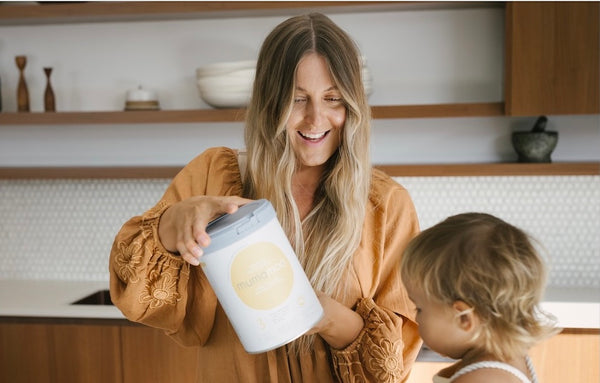

This Perinatal Mental Health Week, the theme is Hold The Parent. For mums living in rural and remote Australia, being held can be harder to come by, with family hours away, services stretched thin, and the nearest friendly face sometimes a long drive down a dirt road.
Last month, national charity Motherland released Raising Rural, Australia’s National Report on Rural Motherhood. More than a thousand mothers, from large country towns to remote stations, shared what life is really like raising a family in the bush. It’s the largest picture of rural motherhood ever gathered in Australia, and founder Stephanie Trethewey frames it with one simple question: “She’s holding it all together. But who is holding her?”
Here’s what they told us, and why it matters to every one of us.
Doing more, with less, further from help
The numbers are hard to read, but they matter.
-
More than two in three rural mums (68%) say they’ve experienced postnatal depression or anxiety.
-
Nearly half of those mums never sought professional help. In remote and very remote areas, fewer than half reached out at all.
-
One in three travelled more than two hours to give birth, and some more than eight.
-
81% say there isn’t enough postnatal support for rural mums.
-
42% can’t access a local mothers group, often because there simply isn’t one.
Running through almost every finding is one word: isolation. Seven in ten mums named it as the hardest part of rural motherhood, and it was the most common reason they gave for their mental health struggles. Isolation from friends, from family, from services, and sometimes from anyone who truly understands.
Add to that the invisible workload. Nearly every mum surveyed holds a working role of some kind, paid or unpaid, often on the farm, and close to six in ten partnered mums feel the parenting load isn’t shared fairly. They’re keeping the books, feeding the contractors, supervising distance education and raising little ones, often all before lunch.
Why so many don’t reach out
When mums explained why they never sought help, the most common answer was that they didn’t recognise what was happening at the time. Many only realised later that what they’d been living through wasn’t just “normal” new-mum exhaustion.
Others felt they should push through on their own, or didn’t think they were struggling “badly enough” to deserve support. Some had no GP or psychologist nearby, couldn’t find the time or childcare to get to an appointment, or simply didn’t know where to start.
And for some who did reach out, the help that came back was patchy: long waits, costly private sessions, or no follow-up once the first few weeks had passed.
That’s exactly why early support matters so much. The longer a struggling mum goes without being noticed, the heavier things can get. For more than a quarter of the mums surveyed, their postnatal depression or anxiety lasted longer than a year, and for around one in five it has never fully lifted.
The good news is that connection makes a difference. Mums who had a fairer share of the load at home and a mothers group to lean on were less likely to report postnatal depression or anxiety. Being held, it turns out, helps.
What rural mums are asking for
When asked what would make the biggest difference right now, rural mums didn’t ask for the world. They asked for someone to mind the kids so they could breathe, an extra pair of hands around the house, a decent night’s sleep, and someone who understands their life. Nearly one in four named connection or companionship.
Off the back of the report, Motherland is calling for five national reforms so rural mums are supported earlier, closer to home and at every stage of motherhood:
-
Find her: check in on mums’ mental health at every point of care, so no one is left to recognise their own distress alone.
-
Care for her: a guaranteed, funded schedule of postnatal visits that looks after mum, not just baby.
-
Connect her: funded peer support and “village” building, before crisis, not only after it.
-
Reach her: local birthing services and outreach care, so distance doesn’t become danger.
-
Enable her: flexible childcare that works in the bush, and disaster support that reaches mums directly.
And the joy, too
This isn’t a story of hardship alone. Most rural mums wouldn’t trade their life for anything. Asked what surprised them most about motherhood, they talked about love, joy and discovering their own strength. Two-thirds of those who added extra comments said something positive about raising children on the land.
Both things are true at once. Rural motherhood can be isolating and beautiful, hard and deeply worth it. And the women living it deserve to be held through all of it.
How you can hold a rural parent
-
Check in, and keep checking in. Distance makes it easy to assume someone is coping. A call or message, especially months after the baby arrives, can mean more than you know.
-
Share Motherland. Motherland Village is an online mothers group for rural mums with children of any age, from newborns to teens, and Motherland Connect is a free directory of services for rural families. Its Scholarship Fund means cost doesn’t have to be a barrier.
-
Read the report. You can read the full Raising Rural report and support Motherland’s work at motherlandaustralia.com.au.
Support is available
If this story raises anything for you, you don’t have to wait until it feels “bad enough”.
-
PANDA National Helpline: 1300 726 306
-
Gidget Foundation Australia: 1300 851 758
-
Royal Flying Doctor Service: telehealth and outreach care for rural and remote communities, flyingdoctor.org.au
-
13YARN: 13 92 76, 24/7 support for Aboriginal and Torres Strait Islander people
-
Lifeline: 13 11 14, 24/7 crisis support
-
In an emergency, call 000.
Source: Motherland (2026), Raising Rural – Australia’s National Report on Rural Motherhood.
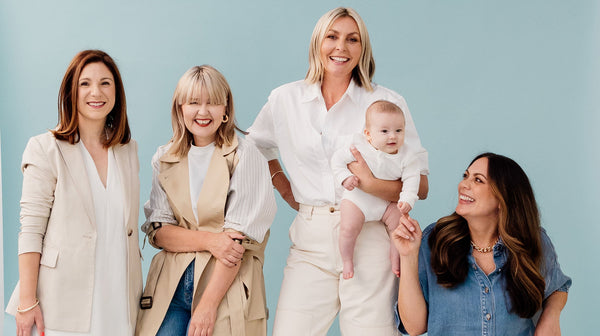
Image Credit: Stephanie Trethewey, founder Motherland Australia